Timber Decking vs Composite Cost UK: 2026 Price & Value Guide
Timber Decking vs Composite Cost UK: A Comprehensive Financial and Performance Guide
Planning a garden deck installation in the United Kingdom requires balancing initial material outlays against long-term maintenance costs and structural longevity. Homeowners and property managers face a fundamental choice between traditional timber decking—such as pressure-treated softwoods and natural hardwoods—and modern wood-plastic composite (WPC) materials.
Understanding the financial commitment of a deck project involves looking past retail board pricing. Total expenditure is shaped by structural subframe materials, specialized fixings, professional carpentry rates across UK regions, and ongoing upkeep demands over a multi-decade lifespan. This guide details the core financial distinctions between timber and composite decking in the UK, breaks down typical material and installation costs, presents practical garden scenarios, and offers a clear long-term value comparison.
Overview of Timber Decking vs Composite Cost UK
![Composite Decking Cost: How Much Is Composite Decking? [UK]](https://cdn.myjobquote.co.uk/images/cost-of-installing-composite-decking-in-your-garde-1.jpg)
Evaluating timber decking vs composite cost UK metrics reveals a distinct trade-off between initial capital expenditure and ongoing maintenance obligations. Pressure-treated softwood decking represents the lowest entry price, with supply-only materials ranging from £15 to £30 per square meter. Hardwood decking materials sit significantly higher at £85 to £100+ per square meter, while composite decking spans a broad middle-to-premium range of £37 to £92+ per square meter depending on board profile and protective shell capping.
+-----------------------------------------------------------------+
|          SUPPLY-ONLY MATERIAL COST COMPARISON (PER M²)          |
+-----------------------------------------------------------------+
|  Pressure-Treated Softwood:  [== £15 - £30 ==]                  |
|  Composite Decking Boards:   [====== £37 - £92+ ======]         |
|  Natural Hardwood (e.g. Ipe): [======== £85 - £100+ ========]    |
+-----------------------------------------------------------------+
Core Material Differences
Traditional timber decking consists of solid organic wood cut from pine, spruce, or hardwood trees. Softwood boards are treated with copper-based preservatives under pressure to resist moisture rot and insect attack. Hardwoods derive natural resistance from dense cell structures and organic oils.
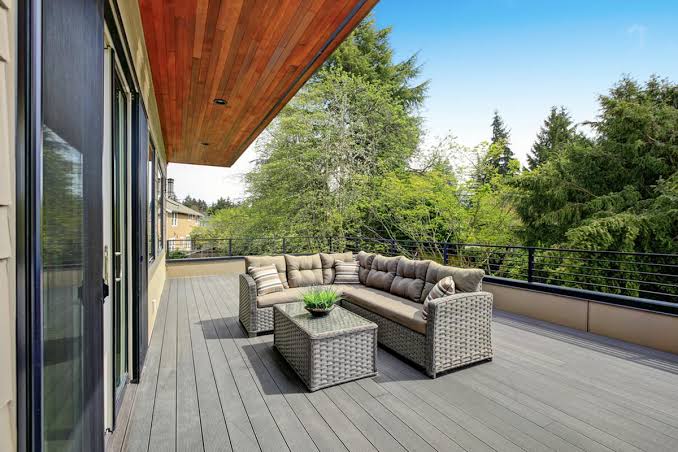
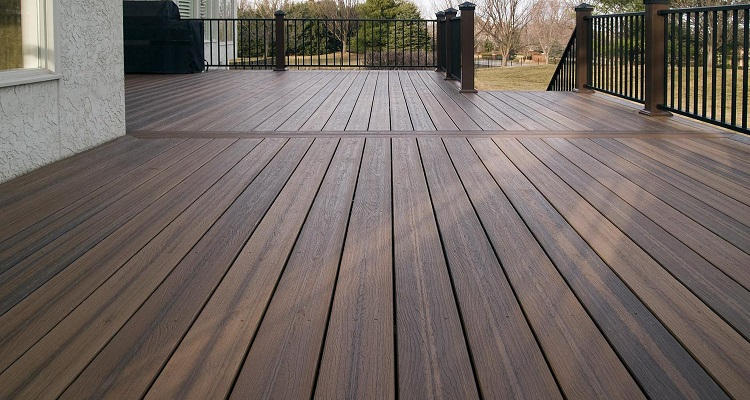
Composite decking is an engineered material manufactured by blending reclaimed wood fibers with recycled high-density plastics (HDPE or polypropylene). Second-generation composite boards feature a co-extruded polymer cap that completely seals the wood-plastic core against UK weather, algae growth, and UV fading.
Long-Term Financial Dynamics
Softwood decking requires lower upfront capital but demands annual or biannual sanding, staining, oiling, and board repairs to combat damp British climate conditions. Composite decking carries a higher purchase price but eliminates staining costs, drastically reducing ongoing maintenance expenses. As a result, the total cumulative expenditure between high-grade timber and composite boards narrows significantly over a 15- to 20-year period.
Key Material Categories and Performance Types
Decking options fall into major structural categories, each offering distinct visual characteristics, load-bearing properties, and price brackets.
| Category / Type | Description | Common Use Case | Relative Cost & Upkeep Level (UK) |
| Pressure-Treated Softwood | Pine or spruce boards treated with preservative salts. Economical but porous. | Budget garden updates, rental properties, temporary platforms. | Lowest Upfront Cost (£15–£30/m²) / Highest Upkeep |
| Uncapped Composite (Hollow) | Lightweight WPC boards with internal channels; exposed composite surface. | Sheltered garden patios, low-traffic residential step-outs. | Low-to-Mid Cost (£37–£50/m²) / Low Upkeep |
| Capped Composite (Solid) | High-density solid core encapsulated in an outer polymer protective shell. | Family gardens, hot tub surrounds, high-traffic terraces, commercial decks. | Mid-to-High Cost (£70–£92+/m²) / Lowest Upkeep |
| Naturally Durable Hardwood | Dense timber species such as Balau, Ipe, or Oak; naturally resistant to decay. | Premium architectural builds, natural wood aesthetics, luxury gardens. | Highest Material Cost (£85–£100+/m²) / Moderate Upkeep |
| Thermally Modified Timber | Softwood baked at high temperatures to alter cell structure and eliminate moisture absorption. | Eco-focused builds, modern minimalist garden designs. | High Material Cost (£65–£90/m²) / Low-to-Mid Upkeep |
Selecting the Right Option
Choosing between timber and composite depends on budget flexibility and long-term maintenance preferences. Homeowners seeking authentic wood grain textures with a lower initial outlay often select pressure-treated softwood or natural hardwood. Conversely, those prioritizing slip resistance in damp UK shade and wishing to avoid seasonal painting, sanding, and sealing typically choose capped composite decking.
Practical Project Scenarios Across UK Gardens
Site layout, ground moisture, elevation, and usage demands influence total construction costs for both material choices.
Scenario A: Standard Rear Garden Deck (20 m²)
Installing a simple, single-level ground platform replacing an old lawn space in a suburban UK garden with clear site access.
-
Components & Materials: 20 m² of deck boards (Softwood vs. Capped Composite), C24 treated timber subframe joists (400mm centers), concrete pad footings, perimeter fascia.
-
Process Steps:
-
Excavate topsoil, lay heavy-duty geotextile weed membrane, and place concrete support blocks.
-
Assemble a C24 pressure-treated timber joist subframe grid.
-
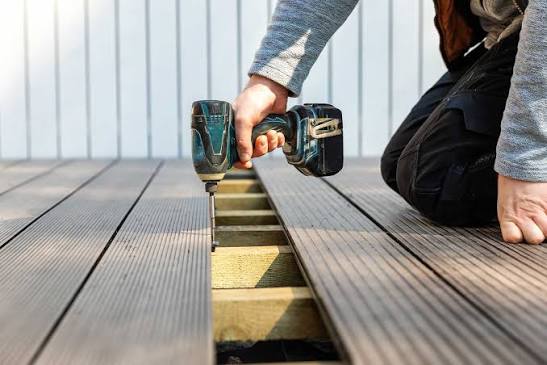
Secure deck boards using face-screws (for timber) or concealed expansion clips (for composite).
-
Trim perimeter edges and attach fascia strips.
-
-
Relevance: Highlights basic cost differences: total installed softwood costs land around £1,300 to £2,000, whereas an equivalent composite installation ranges from £2,600 to £4,000.
Scenario B: Raised Terrace with Perimeter Balustrade (30 m²)
Constructing an elevated outdoor seating space over a sloped lawn area, requiring post supports, stairs, and safety handrails.
-
Components & Materials: 30 m² deck boards (Hardwood vs. Solid Capped Composite), 100x100mm treated post uprights, concrete post foundations (Postcrete), composite or glass balustrade kit.
-
Process Steps:
-
Dig post holes below ground level and anchor structural posts with concrete.
-
Frame an elevated bearer and joist structure, maintaining 300mm joist centers.
-
Fit surface boards, allowing correct thermal or moisture expansion gaps.
-
Install code-compliant perimeter balustrades and stair treads.
-
-
Relevance: Demonstrates how raised structural post-work and safety railings raise overall investment, with hardwood decks costing £5,000 to £7,500 and premium composite systems reaching £6,000 to £9,500+.
Scenario C: Shaded, High-Moisture Courtyard Garden (15 m²)
Updating an enclosed, damp urban courtyard surrounded by high walls where sunlight is limited and algae growth is frequent.
-
Components & Materials: 15 m² solid capped composite boards or pressure-treated softwood, recycled plastic subframe joists, stainless steel fixings.
-
Process Steps:
-
Clear existing wet paving slabs and verify sub-deck drainage channels.
-
Construct a moisture-proof subframe using recycled plastic joists over rubber pads.
-
Lay capped composite boards with stainless steel concealed clips.
-
Seal sub-deck edges while leaving ventilation clearance.
-
-
Relevance: Illustrates environments where softwood timber rots rapidly due to standing moisture and lack of sunlight, making rot-impervious composite systems far more cost-effective over time.
Comparative Scenario Analysis
In dry, sunny ground-level installations, pressure-treated softwood offers significant initial savings. However, in damp, shaded courtyards or raised coastal locations exposed to severe weather, the elevated rot resistance of composite materials prevents premature subframe and surface failure, offsetting higher initial board expenses.
Planning, Budgeting, and Resource Considerations
Comparing short-term installation budgets against a 20-year cumulative cost forecast reveals the true financial profile of timber decking vs composite cost UK investments.
20-Year Cumulative Cost Comparison (20 m² Deck Example)
| Expense Category | Pressure-Treated Softwood | Capped Composite Decking | Natural Hardwood (e.g. Balau) |
| Initial Supply Materials (Boards) | £400 – £600 | £1,000 – £1,700 | £1,700 – £2,000 |
| Subframe & Fixings | £400 – £600 | £500 – £800 | £600 – £900 |
| Professional Fitting Labor | £800 – £1,200 | £1,000 – £1,500 | £1,200 – £1,800 |
| Initial Installed Cost | £1,600 – £2,400 | £2,500 – £4,000 | £3,500 – £4,700 |
| Annual Cleaning & Stain Supplies (20 Yrs) | £1,200 – £2,000 | £200 – £400 (Soap/Water) | £1,500 – £2,500 |
| Estimated Board Replacement / Repairs | £600 – £1,200 (At yr 10–12) | £0 (25-Yr Warranty) | £300 – £600 |
| Total 20-Year Cumulative Cost | £3,400 – £5,600 | £2,700 – £4,400 | £5,300 – £7,800 |
Note: Figures above are estimates based on 2026 UK material and trade labor averages inclusive of VAT. Labor and material rates vary by region, site complexity, and supplier.
Installation Strategies, Tools, and Subframe Options
The method of securing surface boards and the specification of the underlying subframe directly dictate structural lifespan.
+-----------------------------------------------------------------+
|                   SUBFRAME MATERIAL OPTIONS                     |
+-----------------------------------+-----------------------------+
|     TREATED C24 TIMBER JOISTS     | RECYCLED PLASTIC / ALUMINUM |
|  [+] Low initial material price   | [+] 100% rot and decay proof |
|  [-] Vulnerable to ground dampness| [+] Matches composite life  |
|  [-] Needs tape protection        | [-] 2x to 3x material cost  |
+-----------------------------------+-----------------------------+
1. Treated C24 Timber Subframes
Pressure-treated structural softwood timber joists laid on concrete footings or posts.
-
Advantages: Economical initial cost; widely available across UK builders merchants; easy to cut and adjust on site.
-
Disadvantages: Can rot in 10 to 15 years if exposed to standing water, potentially failing before composite surface boards.
2. Recycled Plastic or Aluminum Subframes
Non-organic structural joists engineered to support decking boards over wet ground or flat roofs.
-
Advantages: Completely rot-proof; impervious to water absorption and insect damage; lasts 25+ years without degradation.
-
Disadvantages: Higher upfront material purchase cost compared to standard timber joists.
3. Concealed Clip Systems (Composite Only)
Hidden T-clips or stainless steel starter clips inserted into grooved composite board edges.
-
Advantages: Leaves the deck walking surface free of exposed screw holes; automatically maintains consistent expansion gaps between boards.
-
Disadvantages: Higher hardware cost; requires specific grooved board profiles.
4. Surface Face-Screwing (Timber & Non-Grooved Composite)
Driving specialized timber or composite screws directly through the top face of the board into joists below.
-
Advantages: Maximum mechanical holding strength; lower clip hardware cost; allows straightforward single-board replacement.
-
Disadvantages: Creates visible screw heads; requires precise countersinking to prevent board mushrooming on composite surfaces.
Safety, Environmental Risks, and Common Pitfalls
Failing to account for environmental factors during installation can cause structural warping, slippery walking surfaces, or invalid warranties.
Surface Slipperiness from Algae Growth
-
The Issue: Softwood decking becomes dangerously slick when wet due to green algae accumulation in timber grooves.
-
Why It Happens: Damp climate conditions combined with porous wood fibers trap organic matter.
-
Prevention: Regularly scrub softwood boards with anti-fungal wash or choose non-porous capped composite boards with high slip-resistance ratings.
Thermal and Moisture Expansion Failure
-
The Issue: Boards buckling, warping, or pushing against perimeter walls.
-
Why It Happens: Timber swells sideways when wet; composite expands lengthwise when heated by sunlight.
-
Prevention: Maintain correct expansion gaps during fitting (3mm–6mm for composite board ends; 2mm–4mm side gaps for timber depending on moisture content).
Subframe Joist Rot Beneath Composite Boards
-
The Issue: Composite deck surface remains intact while the underlying timber joist frame rots and collapses.
-
Why It Happens: Using standard unprotected timber joists beneath 25-year composite boards in poorly ventilated areas.
-
Prevention: Apply self-adhesive butyl joist tape along the top edges of all timber framing or use recycled plastic subframe joists.
Maintenance Routines and Long-Term Care Best Practices
Ongoing maintenance routines differ significantly between timber and composite installations.
+-----------------------------------------------------------------+
|                   SEASONAL UPKEEP CHECKLIST                     |
+-----------------------------------------------------------------+
| TIMBER DECKING:                                                 |
| [ ] Spring Wash: Scrub with oxygen-bleach timber cleaner        |
| [ ] Sanding: Lightly sand split fibers or surface flaking       |
| [ ] Sealing/Staining: Apply oil/stain coats every 1-2 years    |
|                                                                 |
| COMPOSITE DECKING:                                              |
| [ ] Biannual Cleaning: Wash with warm soapy water & soft brush |
| [ ] Gap Inspection: Sweep debris from expansion channels        |
+-----------------------------------------------------------------+
Timber Upkeep Protocol
-
Annual Sanding and Sealing: Softwood decks require light sanding every 1 to 2 years followed by two coats of high-quality deck oil, stain, or water-repellent sealer to protect against UV graying and rot.
-
Algae Treatment: Apply dedicated timber deck wash annually to remove green slime and prevent slip hazards.
Composite Upkeep Protocol
-
Biannual Washing: Clean the surface twice per year using warm water, mild household detergent, and a soft-bristle broom to remove general dirt and pollen.
-
Clear Gaps: Sweep out leaves and debris trapped in board gaps to maintain proper water drainage.
Project Documentation and Record Keeping
Maintaining clear records protects product warranties and assists with future home resale disclosures.
Recommended Documentation Folder
Maintain a dedicated home binder containing:
-
Material Receipts & Invoices: Proof of purchase detailing board brands, timber treatment ratings, or composite batch numbers.
-
Warranty Certificates: Registered 10- to 25-year manufacturer warranty cards for composite boards.
-
Installer Details: Contractor business details, written quotes, and guarantee terms for fitting labor.
Sample Documentation Entries
RECORD ENTRY 1: MATERIAL SELECTION & INVOICE
- Date: April 14, 2026
- Supplier: UK Building Supplies Ltd (Invoice #UK-77210)
- Deck Type: Capped Solid Composite (Color: Teak Woodgrain)
- Subframe: C24 Pressure-Treated Joists + Butyl Joist Tape
- Warranty: 25-Year Residential Limited Stain/Fade Warranty Registered

RECORD ENTRY 2: FITTING & LABOUR DETAILS
- Date: April 28, 2026
- Contractor: South Coast Landscaping Ltd
- Project Scope: 20 m² ground-level deck installation
- Maintenance Note: Wash surface biannually with warm soapy water.
Closing Summary
Analyzing timber decking vs composite cost UK factors requires contrasting initial material purchase prices against long-term maintenance expenses. While pressure-treated softwood provides an economical entry point for short-term budgets, high-quality composite decking eliminates recurring staining costs and resists rot, offering superior cumulative financial value over a 15- to 20-year lifespan.
Frequently Asked Questions (FAQ)
Is composite decking cheaper than timber over time in the UK?
Yes. Although pressure-treated softwood timber is cheaper to buy upfront, composite decking typically becomes cheaper over a 15- to 20-year period. Softwood requires annual staining, cleaning chemicals, and mid-life board repairs, whereas composite boards require minimal maintenance and carry 25-year structural warranties.
What is the upfront installed price difference per m² in the UK?
Fully installed pressure-treated softwood decking generally costs £50 to £80 per square meter, while installed composite decking ranges from £130 to £350 per square meter depending on board quality (hollow vs. solid capped) and subframe choice. Installed hardwood decking sits between £140 and £160+ per square meter.
Does composite decking rot like timber?
No. Composite decking boards contain synthetic polymers blended with wood fibers, making them highly resistant to rot, fungal decay, and insect attack. However, if composite boards are installed over a traditional wood joist subframe without protection, the timber subframe beneath can still rot over time.
Which decking material is less slippery in UK winters?
Second-generation capped composite decking is generally less slippery than softwood timber in wet UK conditions. Softwood timber absorbs moisture and accumulates green algae in its grooves, creating a slick surface unless scrubbed and treated frequently. Capped composite boards feature non-porous outer shells that resist algae adhesion.