Best Outdoor TV Enclosure Weather Resistant US: 2026 Buying Guide
Best Outdoor TV Enclosure Weather Resistant US: A Comprehensive Technical & Selection Guide
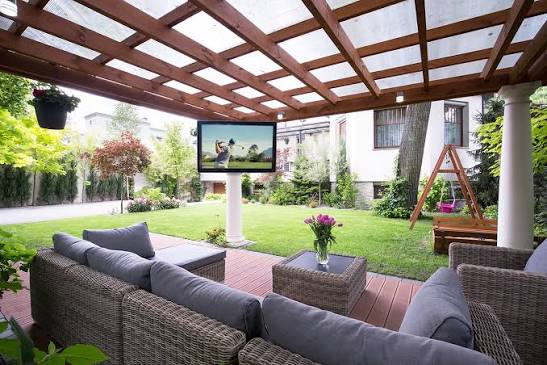
Installing an indoor television in an outdoor living space is a practical way for US homeowners and commercial venues to create outdoor entertainment areas without buying expensive, purpose-built outdoor TVs. Standard consumer televisions are vulnerable to moisture, thermal stress, dust, insects, and physical impacts. A hard-shell, protective cabinet safeguards standard residential displays against unpredictable weather, seasonal temperature shifts, and humidity.
Evaluating the best outdoor tv enclosure weather resistant US market involves analyzing structural shell materials, protective window optics, active thermal management systems, ingress protection (IP) ratings, and mounting hardware. This guide provides a technical overview of weatherproofing standards, compares main enclosure categories, outlines practical installation scenarios across US regions, details budgeting frameworks, and highlights long-term maintenance practices.
Overview of Best Outdoor TV Enclosure Weather Resistant US

An analysis of the best outdoor tv enclosure weather resistant US market reveals a wide spectrum of protection tiers, ranging from basic water-resistant polymer cases to commercial-grade powder-coated steel and aluminum housings equipped with active heating and cooling systems.
Depending on screen size (typically 32 to 85+ inches), structural materials, anti-glare window treatments, and active thermal management, protective enclosures generally range from $350 to $800 for residential polymer units, $900 to $2,200 for heavy-duty metal housings with thermostatic fans, and $2,500 to $5,000+ for commercial-grade, climate-controlled environmental cabinets featuring internal heaters and anti-shatter glass.
+-----------------------------------------------------------------+
|                US ENCLOSURE PRICE RANGE (TOTAL)                 |
|                      $350.00 - $5,000.00+                       |
+-----------------------------------------------------------------+
| [= Residential Polymer: $350-$800 =] [= Metal w/ Fans: $900-$2,200 =] [= Commercial Climate: $2,500-$5,000+ =] |
+-----------------------------------------------------------------+
Core Concepts and Ingress Protection Engineering
An outdoor television enclosure is a sealed outer housing engineered to accommodate standard consumer displays using VESA mounting patterns. Protection relies on structural integrity and sealing performance. In the United States, weather resistance is measured via Ingress Protection (IP) ratings or NEMA standards:
-
Dust and Solid Protection (First Digit): Rated from 5 (dust-protected) to 6 (dust-tight).
-
Water Ingress Protection (Second Digit): Rated from 4 (protection against splashing water) to 5 (protection against water jets) and 6 (protection against powerful water jets from heavy storms).
-
NEMA Equivalents: NEMA 4 and NEMA 4X standards specify protection against wind-blown dust, driving rain, hose-directed water, and ice formation on the exterior housing.
Primary Environmental Cost Drivers in the US
-
Thermal Management Systems: Enclosing a television creates a internal thermal chamber. Direct sunlight and internal electronics generate high temperatures that can cause liquid crystal display (LCD/LED) panels to turn black or fail. Passive airflow vents keep costs lower, while dual or quad thermostatic fan kits and internal heating elements add component cost.
-
Front Window Optical Clarity: Standard clear acrylic panels are economical but produce glare in bright outdoor environments. Optically clear, UV-stabilized polycarbonate or anti-reflective tempered glass panels maintain visibility and impact resistance, representing a higher material cost.
-
Structural Shell Composition: High-Impact ABS/Polycarbonate alloy shells offer low weight and rot/corrosion resistance. Heavy-gauge powder-coated aluminum or stainless steel shells provide maximum physical security, heat dissipation, and structural rigidity against winds.
Key Categories, Shell Materials, and Optical Front Panels
Protective television enclosures are grouped into distinct categories based on housing material, front panel optics, and climate control features.
| Category / Type | Housing Material & Front Panel | Common Use Case | Relative Cost & Protection Level |
| Heavy-Duty Polymer / ABS Shell | Molded ABS or polycarbonate alloy body with clear polycarbonate front panel. | Covered patios, residential decks, suburban backyards. | Lowest Cost ($350–$800) / IP54 to IP56 Waterproof |
| Powder-Coated Aluminum Cabinet | Extruded aluminum housing with anti-glare polycarbonate shield. | Uncovered decks, direct sun zones, high-heat environments. | Mid Tiers ($900–$1,800) / IP65 High Protection |
| Powder-Coated Steel Armor Box | Heavy-gauge mild or stainless steel with anti-shatter tempered glass. | Commercial venues, sports bars, public parks, high-vandalism areas. | High Tiers ($1,800–$3,200) / High Security & NEMA 4X |
| Fully Climate-Controlled System | Aluminum or steel shell with thermostatic fans, internal heaters, and humidity sensors. | Extreme climates (Sub-zero winter regions or high-heat desert zones). | Highest Cost ($2,500–$5,000+) / IP66 Full All-Weather |
Choosing Between Enclosure Categories
Selecting a protective enclosure requires balancing local weather conditions against screen brightness demands. Molded polymer units are light and cost-effective for covered porches where direct sun exposure and extreme rain are limited. Exposed decks subject to direct sun require powder-coated aluminum cabinets equipped with active cooling fans to prevent heat buildup inside the housing. Commercial venues or regions subject to freezing winter conditions demand heavy steel or climate-controlled enclosures fitted with anti-glare glass and internal heaters.
Practical Application Scenarios Across US Climates
Regional climate profiles, sun angles, wind exposure, and wall substrates dictate enclosure specifications across the United States.
Scenario A: Covered Deck in the Pacific Northwest (55-Inch TV)
Installing a 55-inch polymer enclosure on a timber-framed, roof-covered patio in Oregon, protecting against continuous high atmospheric humidity, fog, and rain blow.
-
Components & Materials: High-impact ABS polymer shell, UV-stabilized clear polycarbonate front panel, IP55 dual-fan active ventilation kit, weather-sealed cable grommets, articulating full-motion wall mount.
-
Process Steps:
-
Verify timber wall post stud locations behind exterior siding.
-
Anchor heavy-duty wall mount using structural stainless steel lag bolts.
-
Hang polymer enclosure chassis onto the wall mount and level the unit.
-
Mount 55-inch indoor television to internal VESA rails; route HDMI and power cables through bottom rubber grommets.
-
Connect thermostatic fan power supply and seal the front viewing window onto peripheral neoprene gaskets.
-
-
Relevance: Demonstrates a residential deployment in a high-moisture climate where passive sealing and basic active ventilation prevent internal condensation buildup, keeping total enclosure costs between $500 and $850.
Scenario B: Uncovered Pool Deck in the Desert Southwest (65-Inch TV)
Mounting a 65-inch powder-coated aluminum enclosure in direct sunlight on a stone veneer wall in Arizona, where summer ambient temperatures exceed 110°F ($43^\circ\text{C}$).
-
Components & Materials: Marine-grade powder-coated aluminum housing, anti-glare polycarbonate front shield, quad-fan high-CFM thermostatic cooling system, internal thermal insulation layer, ultra-bright 4K consumer TV.
-
Process Steps:
-
Drill concrete anchor holes into stone masonry backwall using a rotary hammer drill.
-
Secure heavy-duty tilt mount using expansion masonry anchors.
-
Mount aluminum enclosure body; connect internal quad-fan wiring module to a dedicated outdoor GFCI circuit.
-
Install television onto internal VESA bracket; calibrate thermostatic fan trigger temperature to 90°F ($32^\circ\text{C}$).
-
Test active cooling airflow to verify heat dissipation under direct sun exposure.
-
-
Relevance: Highlights direct-sun installations where heat management is critical to prevent thermal blackouts or internal component failure, with costs ranging from $1,400 to $2,400.
Scenario C: Commercial Outdoor Bar in the Northeast (75-Inch TV)
Installing a 75-inch heavy-gauge steel enclosure at an outdoor restaurant venue in New York exposed to freezing winter conditions, road salt dust, and public physical access.
-
Components & Materials: Heavy-gauge powder-coated steel housing, anti-shatter laminated security glass window, automatic internal heating module (activates below 40°F / $4^\circ\text{C}$), dual cooling fans, dual key-locking latch doors.
-
Process Steps:
-
Secure engineering sign-off for structural brick wall load capacities.
-
Mount commercial-grade steel enclosure frame using heavy-duty stainless steel anchor studs.
-
Wire internal heating and fan control boards to an isolated commercial breaker panel.
-
Mount commercial display screen inside housing; set internal thermostat to prevent winter frost condensation.
-
Lock heavy-duty outer key latches to secure hardware against physical tampering.
-
-
Relevance: Illustrates commercial builds requiring impact defense, anti-vandalism features, and low-temperature heating elements, setting costs between $2,800 and $4,800.
Comparative Scenario Analysis
Pacific Northwest covered patio installs focus primarily on moisture protection and perimeter gasket sealing. Southwest pool deck setups prioritize heat dissipation, requiring aluminum construction, active multi-fan ventilation, and anti-glare front panels. Commercial Northeast installs demand structural steel framing, key-locking latches, anti-shatter glass, and internal heating coils to survive winter freezes and public exposure.
Planning, Cost, and Resource Allocation
Proper planning requires balancing enclosure purchase prices against television replacement costs, thermal options, mounting hardware, and electrical labor. The sample budget table below outlines typical expenses for installing a 65-inch outdoor TV enclosure system in the US.
| Category | Estimated Cost (65-Inch Enclosure Build) | Explanation | Optimization Tips |
| Protective Enclosure Cabinet | $700 – $1,800 | Polymer or aluminum shell with anti-glare shield. | Choose polymer shells for shaded areas to keep cabinet costs low. |
| Active Fan / Heater Module | $120 – $350 | Thermostatic cooling fan kit or internal heating coil. | Buy enclosures with factory-integrated fan kits to lower assembly time. |
| Heavy-Duty Weather Mount | $80 – $220 | Outdoor-rated powder-coated or stainless VESA wall mount. | Verify weight capacities to support both the TV and heavy enclosure shells. |
| Standard Consumer TV | $400 – $900 | Standard 65-inch 4K LED consumer TV (placed inside enclosure). | Use budget 4K consumer screens; the enclosure provides protection. |
| Electrical Line & GFCI Outlet | $200 – $500 | Outdoor-rated code-compliant GFCI outlet and wiring conduit. | Install the outlet directly behind the mounting footprint for clean cable management. |
| Professional Trade Fitting | $250 – $600 | Specialized labor for wall mounting, leveling, and electrical hookup. | Ensure wall substrates (brick, timber, stone) are pre-inspected before installation. |
Note: Figures above are estimates in US Dollars ($). Actual costs vary based on regional trade rates, screen dimensions, wall substrates, and specific climate control options.
Technical Strategies, Climate Controls, and Mounting Options
Evaluating ventilation strategies, front panel optics, and mounting systems ensures clear viewing quality and equipment longevity.
+-----------------------------------------------------------------+
|                    FRONT PANEL MATERIAL COMPARISON              |
+-----------------------------------+-----------------------------+
|    UV-STABILIZED POLYCARBONATE    |  ANTI-REFLECTIVE TEMPERED GLASS |
|  [+] Completely shatterproof      | [+] High scratch resistance |
|  [+] Light weight; budget friendly| [+] Superior optical clarity|
|  [-] Prone to micro-scratches     | [-] Heavy; higher cost      |
+-----------------------------------+-----------------------------+
1. Thermostatically Controlled Dual-Fan Ventilation
Exhaust fan systems triggered by internal temperature sensors when cabinet heat exceeds set limits (e.g., 88°F–95°F / $31^\circ\text{C}$–$35^\circ\text{C}$).
-
Advantages: Prevents internal heat traps; extends TV lifespan; operates only when necessary to save power.
-
Disadvantages: Draws ambient outdoor air into filter channels, requiring periodic dust filter cleaning.
2. UV-Stabilized Polycarbonate Front Shields
High-impact synthetic polymer panels designed to block ultraviolet radiation while preventing screen impact damage.
-
Advantages: Virtually unbreakable; lightweight; shields screen from direct physical impact.
-
Disadvantages: Can develop fine surface scratches if cleaned with harsh abrasive towels.
3. Internal Condensation Heating Modules
Low-wattage internal heating elements designed to keep cabinet temperatures above dew point thresholds.
-
Advantages: Prevents moisture condensation on internal electronics during rapid nighttime temperature drops.
-
Disadvantages: Requires continuous electrical power connection during cold winter months.
4. Outdoor-Grade Powder-Coated Articulating Mounts
Heavy-gauge steel or aluminum VESA wall brackets treated with anti-corrosion exterior coatings.
-
Advantages: Allows full movement to adjust viewing angles and eliminate sun reflections.
-
Disadvantages: Exposes rear cable entries to view when extended fully outward.
Environmental Hazards, Structural Risks, and Common Pitfalls

Failing to account for internal heat accumulation, cable sealing, or wall anchor ratings can cause electronic failure or structural damage.
Internal Overheating and Thermal Blackout
-
The Issue: The television display turns dark or shuts off permanently during hot afternoon hours.
-
Why It Happens: Operating standard consumer TVs in sealed enclosures exposed to direct sunlight without active fan cooling creates a greenhouse effect.
-
Prevention: Install thermostatic cooling fans, specify aluminum cabinet shells, and position enclosures in shaded or partially shaded locations where possible.
Water Intrusion Through Cable Ports
-
The Issue: Moisture entering the cabinet base, leading to internal short circuits or rust.
-
Why It Happens: Running power cords and HDMI cables straight into cabinet cutouts without using self-sealing rubber grommets or drip loops.
-
Prevention: Always route cables through bottom-facing entry ports fitted with split rubber grommets and form a downward drip loop in external wiring.
Fogging and Moisture Condensation on the Front Window
-
The Issue: Water droplets or fog coating the inside of the viewing window, blocking the screen.
-
Why It Happens: Trapping humid air inside the cabinet before a sudden evening temperature drop.
-
Prevention: Ensure internal ventilation fan filters are clean, and place reusable desiccant packs or a low-wattage heating module inside the housing.
Wall Mount Detachment Under Heavy Wind Loads
-
The Issue: The entire enclosure and TV system tearing free from exterior building walls during windstorms.
-
Why It Happens: Anchoring heavy steel or large polymer enclosures into thin wood siding or weak mortar joints without structural lag studs.
-
Prevention: Anchor mounting brackets directly into solid timber framing studs or solid concrete block using structural lag bolts or chemical masonry anchors.
Maintenance Routines and Long-Term Care Best Practices
Establishing a regular maintenance routine preserves front window optics, protects cabinet weather seals, and prevents internal electronic failure.
+-----------------------------------------------------------------+
|                   SEASONAL MAINTENANCE CHECKLIST                |
+-----------------------------------------------------------------+
| BIANNUAL CARE (SPRING & AUTUMN):                                |
| [ ] Clean Fan Filters: Wash or blow out dust from air vents     |
| [ ] Inspect Perimeter Seals: Check neoprene gaskets for cracks  |
| [ ] Clean Viewing Window: Wash front shield with microfiber cloth|
|                                                                 |
| ANNUAL SERVICE:                                                 |
| [ ] Inspect Wall Mount: Tighten wall anchor bolts & VESA screws |
| [ ] Test Thermostat Fans: Verify fans trigger at set temperatures|
+-----------------------------------------------------------------+
Ongoing Upkeep Guidelines
-
Clean Active Fan Air Filters Biannually: Remove and rinse dust filters on active cooling fan intakes every spring and autumn. Clogged air filters restrict cooling airflow, leading to internal heat buildup.
-
Inspect Exterior Rubber Seals and Gaskets: Check peripheral foam or neoprene door gaskets annually for brittleness, cracking, or gaps. Apply silicone gasket conditioner to preserve seal flexibility.
-
Wash Optical Front Shields Safely: Clean polycarbonate or glass front windows using fresh water, mild dish soap, and clean microfiber cloths. Avoid paper towels, ammonia-based glass cleaners, or dry wiping, which cause fine surface scratches.
-
Verify Internal Cable Seals: Inspect bottom cable entry grommets annually to confirm power cords remain sealed against insect and moisture entry.
System Documentation and Inspection Records
Maintaining organized project records aids warranty claims, simplifies replacement TV swaps, and documents safety compliance.
Recommended Record Keeping Binder
Keep a physical or digital project file containing:
-
Cabinet Specs & Purchase Invoices: Receipts detailing enclosure model, IP rating, serial numbers, and front shield material.
-
Electrical Permits & Wiring Diagrams: Copy of electrician trade permits, GFCI outlet certifications, and breaker panel assignments.
-
Maintenance & Filter Replacement Logs: Recorded dates for fan filter cleanings, gasket inspections, and internal TV model updates.
Sample System Log Entries
LOG ENTRY 1: ENCLOSURE INSTALLATION & INITIAL SETUP
- Date: May 12, 2026
- Enclosure Specs: 65-Inch Powder-Coated Aluminum Housing (IP65 Rated)
- Active Components: Thermostatic Dual-Fan Cooling Module (Triggers at 90°F)
- TV Installed: Standard 65-Inch 4K Consumer LED Display (VESA 400x400)
- Mounting Footing: Anchored to concrete masonry wall via 4x 3/8-inch expansion studs

LOG ENTRY 2: SEASONAL FILTER & GASKET SERVICE
- Date: October 20, 2026
- Fan Filter Maintenance: Air intake filters removed, washed, dried, and reinstalled
- Seal Check: Perimeter neoprene door gaskets inspected; silicone conditioner applied
- Optical Cleaning: Polycarbonate front shield washed with warm water and microfiber cloth
- System Status: Thermostatic fans tested and operational; zero internal moisture detected
Closing Summary
Selecting the best outdoor tv enclosure weather resistant US property owners require involves balancing enclosure housing materials (polymer vs. aluminum vs. steel) against local climate pressures, thermal management needs, front window optics, and IP weatherproofing ratings. By choosing appropriate housing materials, installing thermostatic fan cooling systems for high-heat areas, securing mounting brackets into solid structural framing, and conducting biannual maintenance on fan filters and door seals, homeowners and commercial operators can protect standard televisions in outdoor environments for years.
Frequently Asked Questions (FAQ)
Can I put a standard indoor TV in an outdoor TV enclosure?
Yes. That is the primary function of an outdoor television enclosure. The hard-shell cabinet provides waterproof, dust-proof, and impact-resistant protection around standard consumer televisions, eliminating the need to buy specialized outdoor TVs.
Do outdoor TV enclosures need cooling fans?
In most US regions, yes—especially if the enclosure is installed in direct sunlight or in areas where summer temperatures exceed 80°F ($27^\circ\text{C}$). Televisions generate internal heat, and direct sun creates a greenhouse effect inside sealed cabinets. Thermostatically controlled cooling fans draw out hot air to prevent screen blackouts and internal component failure.
What is the difference between polycarbonate and glass front shields?
Polycarbonate is lightweight, virtually unbreakable, and highly shatterproof, making it ideal for residential backyards and impact defense. However, it can develop fine surface scratches if wiped with abrasive cloths. Tempered glass offers superior scratch resistance and optical clarity, but adds significant weight and cost, making it common in commercial applications.
What IP rating should I look for in an outdoor TV enclosure in the US?
Look for an enclosure with an IP rating of IP55 to IP65. An IP55 rating protects against dust and rain water splashes, making it suitable for covered decks. An IP65 rating provides dust-tight seal performance and protection against high-pressure water jets, making it ideal for fully exposed outdoor walls subject to heavy storms.