Ekodeck vs Timber Cost Australia: 2026 Price & Value Comparison
Ekodeck vs Timber Cost Australia: A Comprehensive Financial and Performance Guide
Building or replacing a deck in Australia requires balancing initial material outlays against long-term maintenance costs, structural longevity, and climate resilience. Homeowners, builders, and property managers face a primary material choice between natural timber decking—ranging from economical pressure-treated pine to premium native hardwoods like Merbau and Spotted Gum—and modern composite alternatives such as Ekodeck.
Evaluating the true financial scope of a project requires looking beyond basic board tags. Total expenditure is shaped by structural subframe components, specialized hidden fixing systems, professional carpentary rates across Australian capital cities, and ongoing maintenance obligations over a multi-decade lifespan. This guide details the financial distinctions surrounding the ekodeck vs timber cost Australia dynamic, breaks down supply and installation pricing, presents practical outdoor scenarios, and provides a clear long-term value comparison.
Overview of Ekodeck vs Timber Cost Australia
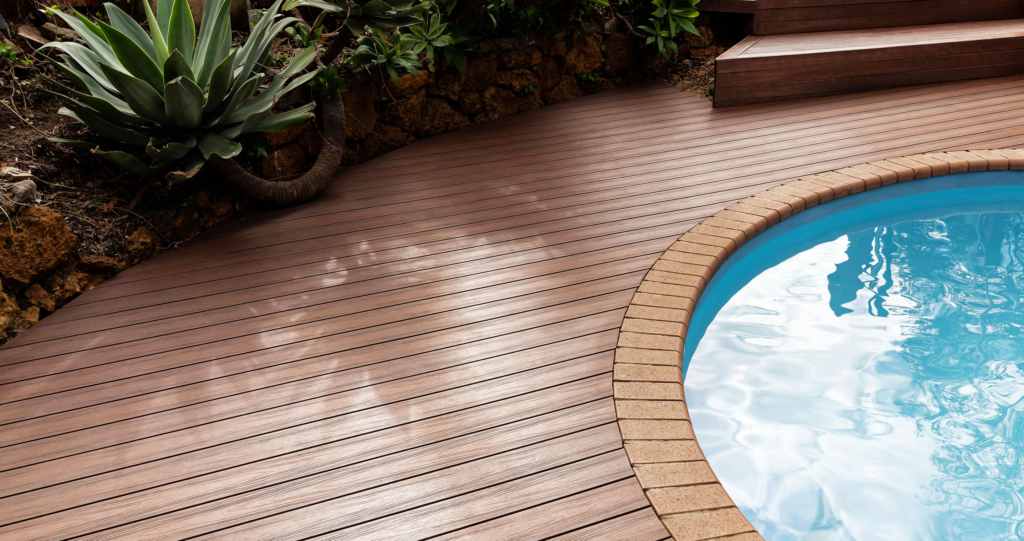
Analyzing the ekodeck vs timber cost Australia landscape reveals a distinct trade-off between upfront capital expenditure and ongoing maintenance overhead. Pressure-treated softwood timber represents the lowest entry barrier, with supply-only board prices ranging from $40 to $70 AUD per square meter ($m^2$). Popular hardwoods like Merbau sit in a mid-tier range of $70 to $140 AUD per $m^2$, while premium native hardwoods (such as Spotted Gum or Blackbutt) range from $110 to $180+ AUD per $m^2$.
Ekodeck—a prominent wood-plastic composite (WPC) brand in Australia manufactured from recycled plastics and reclaimed timber flour—spans a supply-only price range of $95 to $160+ AUD per $m^2$, depending on whether the boards are uncapped (Original range) or co-extruded capped composite (Designer or Flameguard series).
+-----------------------------------------------------------------+
|          SUPPLY-ONLY BOARD COST COMPARISON (PER M²)             |
+-----------------------------------------------------------------+
|  Treated Pine Timber:     [== $40 - $70 ==]                     |
|  Merbau Hardwood:         [==== $70 - $140 ====]                |
|  Ekodeck Composite:       [====== $95 - $160+ ======]           |
|  Spotted Gum Hardwood:    [======== $110 - $180+ ========]      |
+-----------------------------------------------------------------+
Core Material Differences
Traditional timber decking consists of solid organic wood. Treated pine is chemically impregnated with copper-based preservatives to resist fungal decay and termites, but it remains porous and prone to splintering. Hardwoods derive natural durability from dense cell structures and natural extractives, offering rich grain variation that slowly weathers to a silver-grey color unless regularly sealed.
Ekodeck is an engineered material combining high-density polyethylene (HDPE) with wood fibers. Modern capped Ekodeck lines feature a protective outer polymer shell that seals the composite core against moisture absorption, UV degradation, grease staining, and fungal growth without requiring paint, stain, or oiling.
Long-Term Financial Dynamics
While treated pine and Merbau carry lower initial purchase prices than composite boards, natural timber requires annual or bi-annual cleaning, sanding, and re-oiling to prevent warping, cupping, and surface degradation under Australia’s intense UV climate. Ekodeck carries a higher initial material tag but eliminates oiling expenses entirely. Consequently, the cumulative expenditure between hardwood timber and Ekodeck typically reaches parity within 5 to 7 years of installation.
Key Material Categories and Performance Profiles
Decking options in Australia fall into primary structural and aesthetic categories, each presenting distinct maintenance obligations and price structures.
| Category / Type | Description | Common Use Case | Relative Cost & Upkeep Level (Australia AUD) |
| Pressure-Treated Pine | Radiata pine treated with Hazard Class 3 (H3) preservatives; soft, light color. | Budget garden decks, rental properties, paint-finish verandas. | Lowest Upfront Cost ($40–$70/m² supply) / Highest Upkeep |
| Merbau Hardwood | Dense imported tropical timber; rich reddish-brown tone; high natural oil content. | Standard residential decks, alfresco entertainment areas, BAL-29 zones. | Mid-Range Upfront Cost ($70–$140/m² supply) / High Upkeep |
| Australian Native Hardwood | Premium hardwoods like Spotted Gum or Blackbutt; exceptionally dense and fire-resistant. | Luxury architectural builds, high-visibility poolsides, BAL-12.5 to BAL-40 zones. | High Upfront Cost ($110–$180+/m² supply) / High Upkeep |
| Ekodeck (Uncapped Original) | First-generation wood-plastic composite; solid-core with exposed composite surface. | Standard backyard decks, low-maintenance garden walkways. | Mid-to-High Upfront Cost ($95–$125/m² supply) / Low Upkeep |
| Ekodeck (Capped Designer/Flameguard) | Second-generation composite fully encapsulated in an outer polymer protective shell. | Coastal properties, pool surrounds, high-traffic commercial spaces, BAL-29 zones. | Highest Composite Cost ($130–$160+/m² supply) / Lowest Upkeep |
Choosing the Right Board Specification
Selecting between timber and Ekodeck depends on lifestyle preferences and long-term financial expectations. Homeowners who value the natural warmth, unique grain variation, and structural feel of real timber—and who are willing to perform or pay for annual sanding and oiling—often select Merbau or Spotted Gum. Conversely, those seeking a consistent color palette, zero splinters, hidden fastener aesthetics, and freedom from regular maintenance typically choose Ekodeck.
Practical Project Scenarios Across Australian Living Spaces
Site access, ground clearance, climate exposure, and local council requirements dictate total construction expenses across urban and regional Australia.
Scenario A: Small Suburban Ground-Level Deck (18 $m^2$)
Replacing an old concrete patio with a single-level ground platform in a suburban back garden with clear side access.
-
Components & Materials: 18 $m^2$ decking boards (Treated Pine vs. Ekodeck Capped), H3 treated pine subframe joists (400mm centers), concrete deck support blocks, concealed clips or face screws.
-
Process Steps:
-
Remove existing concrete pad and level the underlying soil base.
-
Lay heavy-duty geotextile weed barrier and spread a 50mm compacted gravel drainage layer.
-
Construct an H3 treated pine subframe grid; apply butyl joist protective tape along top edges.
-
Secure decking boards using face screws (for pine) or quick-clip concealed fasteners (for Ekodeck).
-
-
Relevance: Demonstrates baseline pricing: total installed treated pine costs land around $3,500 to $5,200 AUD, whereas an equivalent Ekodeck installation ranges from $5,800 to $8,500 AUD.
Scenario B: Elevated Alfresco Entertainment Deck (35 $m^2$)
Constructing an elevated outdoor seating space attached to a single-story home, raised 1 meter off the ground with perimeter stairs and safety handrails.
-
Components & Materials: 35 $m^2$ decking boards (Merbau Hardwood vs. Ekodeck Designer), H4 treated pine posts, H3 bearers/joists, concrete post foundations, powder-coated aluminum balustrade kit.
-
Process Steps:
-
Excavate post footings 600mm deep and anchor structural posts with concrete.
-
Erect ledger board to the house frame and assemble bearer-joist framing at 450mm centers.
-
Install decking boards, allowing proper expansion clearances.
-
Construct 4-riser stair assembly and install code-compliant safety balustrade.
-
-
Relevance: Illustrates how raised post-work and balustrade accessories increase total investment, with Merbau installations costing $12,500 to $18,500 AUD and Ekodeck composite systems reaching $14,500 to $21,000 AUD.
Scenario C: High-Humidity Coastal Pool Surround (25 $m^2$)
Installing decking around an in-ground swimming pool exposed to constant splash water, chlorine/salt, and unshaded tropical or sub-tropical sun.
-
Components & Materials: 25 $m^2$ solid capped composite (Ekodeck) or natural Spotted Gum, marine-grade 316 stainless steel hardware, recycled plastic or aluminum joist subframe.
-
Process Steps:
-
Inspect ground drainage surrounding pool coping and verify structural clearance.
-
Construct a rot-proof subframe using aluminum or plastic joists over rubber isolation pads.
-
Lay boards using marine-grade 316 stainless steel hidden clips.
-
Picture-frame pool edges using contrasting perimeter board colors.
-
-
Relevance: Highlights environments where timber requires frequent washing and oiling to prevent salt damage and splintering, making slip-resistant, non-porous Ekodeck a practical choice.
Comparative Scenario Analysis
In simple ground-level suburban installations, treated pine and Merbau offer lower initial entry costs. However, in coastal pool surrounds or elevated alfresco areas exposed to severe weather, the rot immunity, splinter-free surface, and color retention of capped composite materials balance out higher initial material expenses.
Planning, Budgeting, and Resource Allocation
Comparing upfront installation budgets against a 20-year cumulative financial forecast highlights the overall economic comparison of the ekodeck vs timber cost Australia investment.
20-Year Cumulative Cost Comparison (30 $m^2$ Deck Example)
| Expense Category | Pressure-Treated Pine | Merbau Hardwood | Ekodeck (Capped Composite) |
| Initial Supply Materials (Boards) | $1,200 – $2,100 | $2,100 – $4,200 | $2,850 – $4,800 |
| Subframe & Hardware | $1,200 – $1,800 | $1,500 – $2,400 | $1,600 – $2,600 |
| Professional Fitting Labor | $2,500 – $4,500 | $3,500 – $5,500 | $3,000 – $5,000 |
| Initial Installed Cost | $4,900 – $8,400 | $7,100 – $12,100 | $7,450 – $12,400 |
| Annual Cleaning & Stain Supplies (20 Yrs) | $3,000 – $5,000 | $4,000 – $7,000 | $400 – $800 (Soap/Water) |
| Estimated Board Repairs / Sanding | $1,500 – $2,500 (At yr 8–12) | $800 – $1,500 | $0 (15-25 Yr Warranty) |
| Total 20-Year Cumulative Cost | $9,400 – $15,900 | $11,900 – $20,600 | $7,850 – $13,200 |
Note: Figures above are estimates in Australian Dollars (AUD) based on market averages. Trade labor rates, site access complexity, and regional material availability will alter final project quotes.
Installation Strategies, Subframes, and Fastener Systems
The choice of underlying subframe and surface fastening methods impacts installation efficiency and long-term durability.
+-----------------------------------------------------------------+
|                  FASTENING SYSTEM COMPARISON                    |
+-----------------------------------+-----------------------------+
|     FACE SCREWING (TIMBER)        |   CONCEALED CLIPS (EKODECK) |
|  [+] High mechanical holding      | [+] Smooth surface appearance|
|  [-] Visible screw heads          | [+] Automatic gap spacing   |
|  [-] Requires pre-drilling timber | [-] Higher hardware cost    |
+-----------------------------------+-----------------------------+
1. H3 Treated Pine Subframes
Radiata pine treated with Hazard Class 3 preservatives for above-ground outdoor structures.
-
Advantages: Economical initial cost; widely available across Australian timber yards; easy to cut and adjust on site.
-
Disadvantages: Can rot over 12 to 18 years if moisture remains trapped between joists and decking boards without protective tape.
2. Concealed Clip Systems (Ekodeck C-Clip & Quick-Clip)
Engineered nylon or stainless steel clips that slot into grooved board edges and screw directly into subframe joists.
-
Advantages: Leaves the deck surface free of visible screw heads; automatically sets consistent 3mm to 6mm expansion gaps; speeds up laying time.
-
Disadvantages: Higher fastener hardware cost compared to standard timber screws.
3. Pre-Drilled Surface Face-Screwing (Timber)
Driving 305 or 316-grade stainless steel screws through the top face of non-grooved timber boards after pre-drilling pilot holes.
-
Advantages: Provides strong mechanical clamping force; allows easy single-board replacement.
-
Disadvantages: Screw heads remain visible; labor-intensive pre-drilling is required to prevent timber splitting.
4. Butyl Joist Protection Flashing Tape
Self-adhesive waterproof butyl membrane applied along the top face of subframe joists prior to board installation.
-
Advantages: Prevents meltwater and rain from pooling on top of timber joists, doubling subframe life beneath long-lasting composite boards.
-
Disadvantages: Adds minor material cost and an extra installation step during framing.
Safety, Thermal Performance, and Common Pitfalls
Failing to account for regional climate factors during installation can result in surface warping, thermal discomfort, or voided product warranties.
Thermal Heat Retention Under Direct Sun
-
The Issue: Composite boards absorbing direct solar heat, making unshaded surfaces hot under bare feet during Australian summer peak hours.
-
Why It Happens: High-density polyethylene plastic holds heat longer than natural timber fibers.
-
Prevention: Choose lighter composite color tones (e.g., light grey or natural ash) for unshaded northern exposures, or install shade sails/pergolas over northern and western facing decks.
Inadequate Expansion Gaps
-
The Issue: Boards buckling, warping, or lifting off joists during hot summer months.
-
Why It Happens: Installing composite boards tightly end-to-end without leaving thermal expansion clearance.
-
Prevention: Follow manufacturer temperature-gap charts precisely during installation, maintaining 3mm to 6mm end-to-end gaps based on ambient fitting temperature.
Tannin Bleeding from Hardwoods
-
The Issue: Dark reddish-black water stains leaching out of timber decking onto concrete slabs, rendering, or pool coping below.
-
Why It Happens: Natural water-soluble tannic acid leaching from unsealed hardwood boards (especially Merbau) during initial rain events.
-
Prevention: Wash raw timber with a dedicated tannin stripper before installation or select Ekodeck composite boards, which contain zero tannins and will not stain underlying structures.
Joist Spacing Exceeding Specifications
-
The Issue: Composite deck feeling springy, sagging, or bouncing under foot traffic.
-
Why It Happens: Spacing joists at 500mm or 600mm centers designed for thick hardwood boards.
-
Prevention: Maintain maximum 400mm joist center spacing for residential Ekodeck installations (300mm for commercial or diagonal layouts).
Maintenance Routines and Long-Term Care Best Practices
Ongoing care demands vary significantly between natural timber and composite decking.
+-----------------------------------------------------------------+
|                   SEASONAL UPKEEP CHECKLIST                     |
+-----------------------------------------------------------------+
| NATURAL TIMBER (MERBAU / PINE / SPOTTED GUM):                   |
| [ ] Annual Cleaning: Scrub with oxygen-bleach timber wash       |
| [ ] Surface Sanding: Sand back split fibers or peeling coats    |
| [ ] Re-Oiling: Apply 1-2 coats of oil/stain every 12-18 months  |
|                                                                 |
| EKODECK COMPOSITE:                                              |
| [ ] Biannual Wash: Hose off dirt with warm water & mild soap    |
| [ ] Gap Inspection: Clear trapped leaves from expansion slots   |
+-----------------------------------------------------------------+
Timber Upkeep Protocol
-
Regular Sanding and Sealing: Softwood and hardwood decks require thorough cleaning and re-oiling every 12 to 18 months. Neglecting timber leads to graying, surface checking, splintering, and premature rot.
-
Tannin Management: Clean fresh hardwood boards with an oxalic acid deck cleaner shortly after installation to extract loose tannins.
Ekodeck Upkeep Protocol
-
Biannual Washing: Clean the surface twice a year using warm water, mild household detergent, and a soft-bristle broom to remove general dust, dirt, and pollen.
-
Clear Drainage Slots: Sweep out leaves and debris trapped in expansion gaps between boards to preserve water runoff channels.
Project Documentation and Record Keeping
Maintaining organized project records protects product warranties and assists with future property sales disclosures.
Recommended Documentation Folder
Keep a dedicated physical or digital home improvement binder containing:
-
Purchase Invoices & Batch Tags: Invoices showing exact board quantities, color names, and batch numbers for future color-matching.
-
Manufacturer Warranty Documentation: Printed copies of Ekodeck’s 15- to 25-year limited structural warranty or timber supplier invoices.
-
Subframe Construction Photos: Pictures taken before board installation showing joist spacing, post depths, and protective tape application.
Sample Project Documentation Logs
RECORD LOG 1: PURCHASE & WARRANTY REGISTRATION
- Date: March 12, 2026
- Supplier: Australian Hardware Merchant (Invoice #AU-88210)
- Material Specs: Ekodeck Capped Composite (Color: Highland Oak)
- Quantity Purchased: 45 Boards (5.4m lengths)
- Warranty Registration: 25-Year Residential Limited Warranty registered online.

RECORD LOG 2: FITTING & SUBFRAME SPECIFICATIONS
- Installation Date: March 26–28, 2026
- Contractor: Apex Decking & Carpentry Services (Invoice #1092)
- Subframe Grid: H3 Pressure-Treated Timber @ 400mm Centers + Butyl Tape
- Fasteners Used: Ekodeck Quick-Clip Concealed System (6mm gap)
Closing Summary
Evaluating the ekodeck vs timber cost Australia decision requires contrasting short-term material purchase prices against long-term maintenance expenses. While treated pine and Merbau offer lower initial outlays, Ekodeck eliminates annual sanding, oiling, and splintering, offering superior total financial value over a 15- to 20-year period.
Frequently Asked Questions (FAQ)
Is Ekodeck more expensive than Merbau timber in Australia?
Upfront, Ekodeck material costs ($95–$160+/m²) are higher than Merbau boards ($70–$140/m²). However, because Merbau requires annual oiling costing $300–$800 per year in supplies or labor, Ekodeck generally breaks even with Merbau within 5 to 7 years.
Does Ekodeck get hotter than natural timber in the Australian sun?
Yes, composite boards contain high-density plastic that absorbs and retains solar heat longer than natural wood. In unshaded northern exposures during summer, Ekodeck will feel warmer underfoot than timber. Choosing lighter color shades helps mitigate surface heat absorption.
Does Ekodeck splinter or leech tannins onto concrete?
No. Ekodeck is manufactured from engineered composite materials that contain zero wood splinters and zero water-soluble tannins. Unlike Merbau—which leaches red-brown tannins that can stain concrete—Ekodeck will not stain underlying slabs or tiles.
Can I install Ekodeck over an existing timber subframe?
Yes, provided the existing timber frame is structurally sound, rot-free, level, and spaced at a maximum of 400mm joist centers. Applying joist protection tape over the tops of existing timber joists before installing new Ekodeck boards is strongly recommended.