Hardwood Decking Suppliers Auckland: 2026 Buying & Species Guide
Hardwood Decking Suppliers Auckland: A Comprehensive Selection & Buying Guide
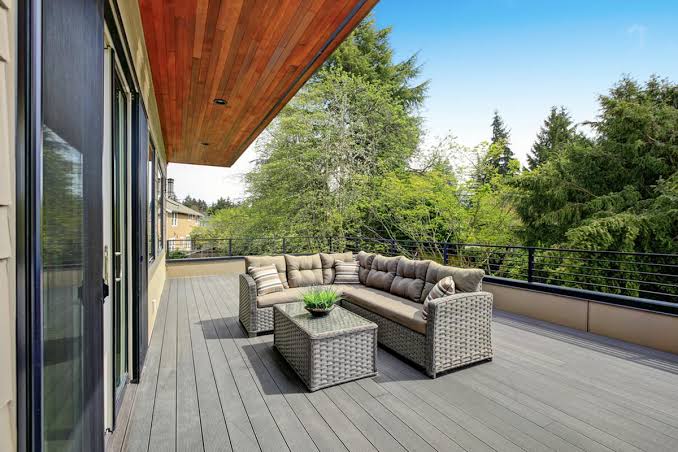
Auckland’s maritime climate presents a unique set of challenges for outdoor building materials. High humidity, sudden rainfall, coastal salt air, and intense summer UV radiation test the limits of residential decks across the region. Consequently, homeowners, architects, and building contractors frequently turn to natural hardwood timber to construct outdoor living spaces. Selecting the right species and securing quality timber from reputable suppliers is critical to ensuring a deck performs structurally and aesthetically for decades.
Navigating the market requires looking beyond visual appearance to evaluate timber durability classes, sustainable forestry certifications, board dimensions, and regional supplier services. Sourcing materials through hardwood decking suppliers Auckland networks involves assessing stock availability, mill origin, kiln-drying standards, factory oiling options, and delivery logistics. This guide provides a detailed breakdown of the hardwood decking market in Greater Auckland, compares major timber species, presents real-world installation scenarios, outlines resource and budget planning, and details best practices for ongoing timber management.
Overview of Hardwood Decking Suppliers Auckland
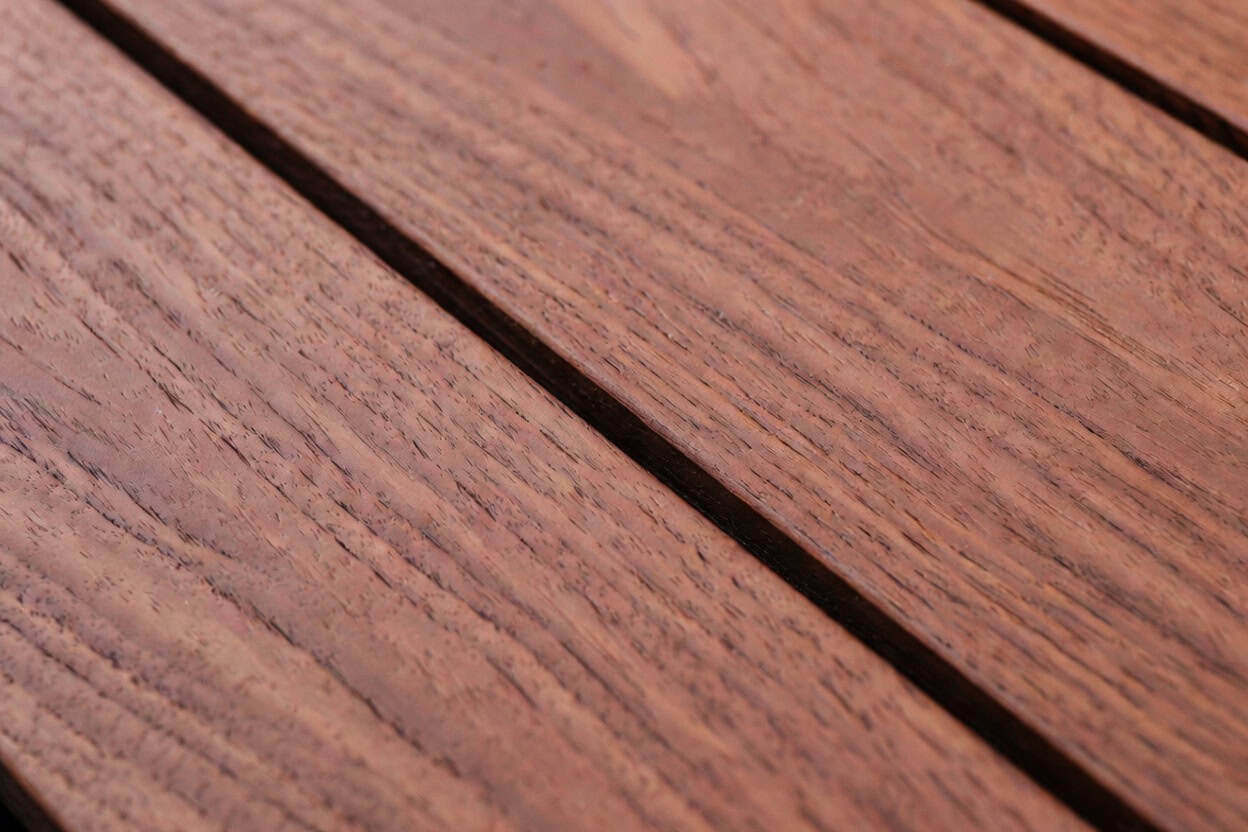
Evaluating the supply landscape across Auckland reveals a diverse market encompassing national building merchants, specialty timber yards, direct importers, and eco-certified hardwood distributors. Hardwood decking materials generally cost between $10.00 and $25.00+ NZD per lineal meter ($LM$) for standard board profiles (such as 90x19mm or 140x19mm). When converted to a square-meter ($m^2$) material metric, board costs land between $85 and $195 NZD per $m^2$ depending on timber species, grade, board width, and factory pre-coating treatments.
+-----------------------------------------------------------------+
|          AUCKLAND HARDWOOD INSTALLED COST (PER M²)              |
|                        $400.00 - $700.00+ NZD                   |
+-----------------------------------------------------------------+
| [= Boards: $85-$195/m² =] [= Subframe/Piles: $75-$135/m² =] [= Trade Labor: $200-$370+/m² =] |
+-----------------------------------------------------------------+
Core Concepts and Material Mechanics
Hardwood decking species are natural broadleaf timbers characterized by dense cell structures, high Janka hardness ratings, and natural extractives (tannins and oils) that provide resistance against fungal decay and wood-boring insects. Unlike softwood radiata pine—which requires industrial chemical pressure treatment to survive outdoor exposure—durable hardwoods naturally withstand weather exposure. In New Zealand, hardwoods are categorized under natural durability classes ranging from Class 1 (25 to 40+ years expected above-ground service life) to Class 2 (15 to 25 years).
Regional Climate and Supply Dynamics in Auckland
-
High-Humidity Acclimatization: Auckland’s damp winters and humid summers mean timber boards expand and contract horizontally. Sourcing kiln-dried (KD) boards with a controlled moisture content of 14% to 18% prevents excessive shrinkage gaps or board cupping after installation.
-
Tannin Management: Certain species (most notably Kwila) contain high levels of water-soluble tannins that leach out during initial rain events, staining adjacent light concrete, rendering, or pool copings.
-
Sustainable Sourcing Standards: Responsible suppliers in Auckland provide timber certified by organizations such as the Forest Stewardship Council (FSC) or the Programme for the Endorsement of Forest Certification (PEFC), ensuring materials do not originate from illegal rainforest logging operations.
Key Timber Species, Categories, and Performance Profiles
Auckland timber merchants supply several core hardwood species originating from the Pacific Islands, South America, Australia, and domestic plantations. Selecting the appropriate species involves matching natural durability and visual grain against project budget constraints.
| Category / Species | Origin & Color Profile | Durability Rating & Features | Relative Board Cost (NZD Supply Only) |
| Kwila (Merbau) | Imported from SE Asia / Pacific Islands; rich dark reddish-brown. | Class 2 Durability (25+ yrs); highly stable; high tannin leaching during initial weathering. | Mid-Range Cost ($10–$15/LM for 90×19; $14–$22/LM for 140×19) |
| Vitex | Imported from Solomon Islands / Vanuatu; pale cream to olive-honey. | Class 2 Durability (20–25 yrs); smooth grain, minimal tannin bleed; weathers to soft silver-gray. | Mid-to-High Cost ($11–$16/LM for 90×19; $17–$24/LM for 140×19) |
| Garapa | Imported from South America; golden-yellow to warm honey brown. | Class 2 Durability (20–25 yrs); fine texture, dense structure; low tannin leaching. | Mid-Range Cost ($10–$14/LM for 90×19; $16–$22/LM for 140×19) |
| Australian Hardwoods (Spotted Gum / Ironbark) | Sourced from PEFC-certified Australian forestry; pale brown to chocolate. | Class 1 Durability (30–40+ yrs); ultra-dense, fire-resistant; minimal shrinkage movement. | High-to-Premium Cost ($14–$19/LM for 86×19; $22–$30+/LM for 135×19) |
| Purpleheart / Cumaru | Sourced from Central & South America; deep violet fading to dark brown. | Class 1 Durability (30+ yrs); extremely hard, dense structure; high wear resistance. | Premium Material Cost ($18–$28+/LM) |
Choosing the Right Species
Evaluating timber options requires balancing aesthetic preferences against site exposure. Kwila remains a classic option for warm, dark red-brown tones but requires isolation from unsealed concrete during initial tannin wash-off. Vitex and Garapa provide lighter honey tones ideal for contemporary architectural designs without severe tannin bleeding risks. For high-traffic commercial decks or coastal sites exposed to extreme weather, Australian Class 1 hardwoods (like Spotted Gum or Ironbark) offer maximum mechanical strength and service life.
Practical Project Scenarios Across Auckland Neighborhoods
Site terrain, coastal proximity, sub-deck ground moisture, and local council regulations alter total decking installation parameters across Auckland.
Scenario A: Flat Urban Courtyard Deck in Ponsonby (20 $m^2$)
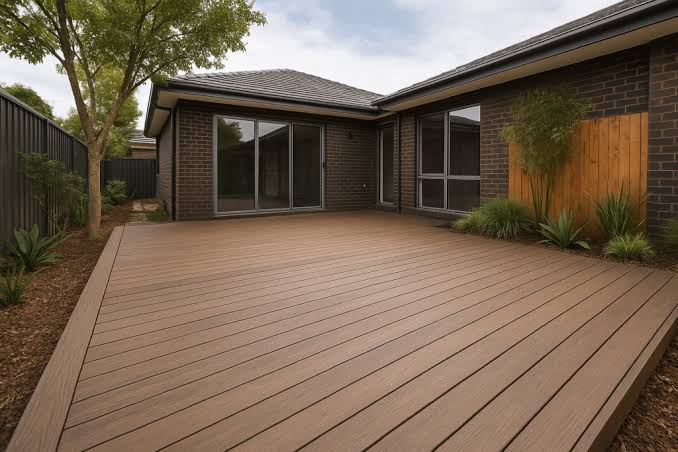
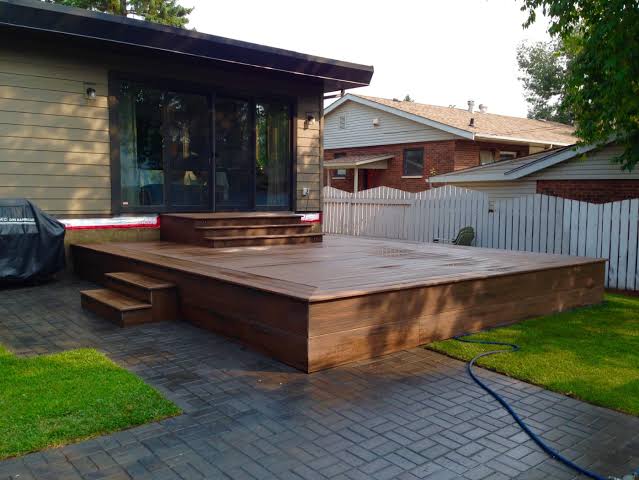
Replacing a worn concrete pad with a low-profile Vitex deck over a flat backyard space with narrow villa side-access.
-
Components & Materials: 210 LM of 90x19mm kiln-dried Vitex decking, H3.2 treated softwood subframe joists (400mm centers), rubber isolation support feet, 305-grade stainless steel screws.
-
Process Steps:
-
Transport materials through narrow residential side passage by hand.
-
Lay low-profile joist subframe over rubber support feet to allow sub-deck water drainage across concrete.
-
Pre-drill and countersink all Vitex boards to prevent end-grain splitting.
-
Fasten boards leaving 5mm expansion gaps and apply a clear penetrating timber oil.
-
-
Relevance: Represents an urban villa retrofit where low ground clearance and manual material transport bring total professional installation costs to $9,000 – $14,000 NZD.
Scenario B: Elevated Suburban Entertainment Platform in North Shore (35 $m^2$)
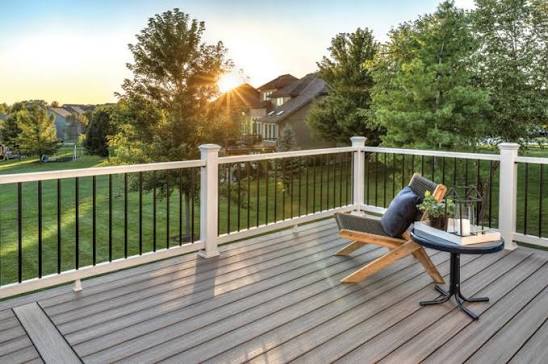
Constructing a raised outdoor entertaining deck attached to a residential home in Albany, elevated 1.2 meters off sloping clay soil with stairs and perimeter safety glass.
-
Components & Materials: 250 LM of 140x19mm Kwila decking, H4 structural support posts, H3.2 structural bearers and joists, butyl joist protective tape, frameless glass balustrade kit.
-
Process Steps:
-
Excavate concrete pier footings 600mm to 900mm deep to anchor posts below Auckland clay movement zones.
-
Mount H3.2 ledger board to house rim joist using code-approved flashing and structural bolts.
-
Construct joist grid at 400mm centers; apply self-adhesive butyl flashing tape along joist tops.
-
Install 140x19mm Kwila boards using stainless steel screws; fit code-compliant glass safety balustrade.
-
-
Relevance: Demonstrates how elevated post-work, heavy clay footings, and safety balustrades increase project scope, setting total installed costs between $18,000 and $28,000 NZD.
Scenario C: High-Exposure Coastal Deck in Eastern Bays / Waiheke Island (45 $m^2$)
Building a coastal outdoor platform exposed to salt air, high winds, and intense UV sunlight overlooking the Hauraki Gulf.
-
Components & Materials: 340 LM of 135x19mm Australian Spotted Gum or Ironbark decking, H4 timber piles, Grade 316 marine-grade stainless steel screws, factory pre-oiled surface protection.
-
Process Steps:
-
Core drill concrete pier footings into coastal rock/clay substrate.
-
Assemble subframe using Grade 316 stainless steel structural brackets and joist hangers.
-
Lay factory-oiled Class 1 Australian hardwood boards with 316-grade stainless fasteners.
-
Apply a secondary topcoat of marine-grade penetrating timber oil after initial acclimatization.
-
-
Relevance: Highlights high-end coastal builds where Class 1 timber species and marine-grade stainless hardware prevent salt corrosion and thermal degradation, setting total costs from $25,000 to $40,000+ NZD.
Comparative Scenario Analysis
Flat urban courtyard builds prioritize low-profile subframe drainage and manual access logistics. Elevated suburban projects balance ground-post engineering with safety balustrades. Coastal island builds require Class 1 timber species, marine-grade stainless fixings, and factory-precoated boards to survive salt air and UV exposure.
Planning, Budgeting, and Resource Considerations
Proper financial preparation requires itemizing board materials, framing timber, footings, fixings, waste disposal, and trade labor. The sample budget below outlines typical costs for a standard 25 $m^2$ residential hardwood deck project in Auckland.
| Category | Estimated Amount / Effort (25 m2 Deck NZD) | Explanation | Optimization Tips |
| Hardwood Surface Boards | $2,250 – $4,875 ($90–$195/m²) | Kwila, Vitex, Garapa, or Spotted Gum decking boards. | Order full-packet quantities from timber yards to secure trade pricing. |
| Subframe Timber & Piles | $1,200 – $2,200 ($48–$88/m²) | H4 timber piles, H3.2 joists, bearers, postcrete. | Use treated softwood (H3.2 pine) for hidden subframes to save costs. |
| Fixings & Hardware | $350 – $750 | 305/316 stainless steel screws, joist tape, ledger bolts. | Buy bulk 1,000-count screw tubs rather than small retail boxes. |
| Factory Pre-Coating / Oil | $150 – $400 | Mill-applied penetrating oil coating on 4 sides. | Select factory-oiled boards to protect timber during construction. |
| Site Prep & Skip Hire | $350 – $650 | Excavation, weed fabric, drainage gravel, waste bin. | Perform basic manual sod clearing yourself to lower contractor fees. |
| Professional Trade Labor | $4,500 – $8,500 ($180–$340/m²) | Carpentry labor for site prep, framing, board laying, trimming. | Book installation crews in autumn/winter for better trade availability. |
Note: Figures above are estimates in New Zealand Dollars (NZD) including GST based on Greater Auckland market averages. Actual quotes vary based on council regulations, site slopes, and supplier pricing.
Supply Chain Strategies, Tools, and Support Options
Selecting the right supply vendor model and technical support tools ensures material consistency and structural compliance.
+-----------------------------------------------------------------+
|                    SUPPLIER CHANNEL COMPARISON                  |
+-----------------------------------+-----------------------------+
|    SPECIALTY HARDWOOD IMPORTER    |   NATIONAL BUILDING MERCHANT|
|  [+] Access to rare/Class 1 woods | [+] Broad branch network    |
|  [+] Factory pre-oiling services  | [+] Integrated hardware tools|
|  [-] Higher minimum order sizes   | [-] Standard species focus  |
+-----------------------------------+-----------------------------+
1. Direct Importers and Specialty Timber Yards
Dedicated timber distributors specializing in imported tropical or Australian hardwoods.
-
Advantages: Direct access to specialized timber grades, custom dressing profiles, and mill pre-oiling services; verified sustainable forestry documentation.
-
Disadvantages: May enforce minimum order quantities (e.g., 200 lineal meters minimum).
2. National Building Supply Merchants
Large trade hardware networks with multiple retail locations across Greater Auckland.
-
Advantages: Convenient branch pickups; integrated supply of subframe timber, fasteners, and tools under one account.
-
Disadvantages: Stock is generally limited to standard core species (e.g., Kwila, Vitex).
3. Factory Pre-Coating Services
Ordering hardwood boards that have received an initial flood-coat of penetrating oil on all four sides at the processing mill.
-
Advantages: Protects timber from rapid moisture loss or rain absorption during transport and fitting; ensures undersides are sealed.
-
Disadvantages: Adds $1.40 to $2.50 per lineal meter to initial material invoices.
4. Digital Lineal Meter Calculators
Estimating software provided by timber yards to convert deck area dimensions ($m^2$) into lineal meters ($LM$), accounting for board gaps and a 10% cutting waste allowance.
-
Advantages: Prevents under-ordering materials; reduces waste disposal fees.
-
Disadvantages: Must be adjusted manually if laying boards diagonally or creating multi-board picture-frame borders.
Safety Risks, Structural Challenges, and Common Pitfalls
Working with high-density hardwoods requires avoiding common structural and material management errors.
Tannin Bleeding onto Sensitive Paving
-
The Issue: Red-brown chemical runoff staining underlying concrete, tiles, or house foundations.
-
Why It Happens: Water-soluble tannic acid leaching out of raw Kwila or unwashed hardwood during initial rainfall.
-
Prevention: Pre-wash raw timber with an oxalic-acid deck cleaner off-site, select low-tannin species (like Vitex or Garapa), or protect ground surfaces with drop sheets during weathering.
Fastener Shearing and End-Grain Splitting
-
The Issue: Screw heads snapping off mid-drive or timber cracking near board ends.
-
Why It Happens: Driving fasteners into dense hardwoods without drilling clearance pilot holes and countersinks.
-
Prevention: Always use specialized pilot-bit countersink tools before driving stainless steel screws.
Inadequate Sub-Deck Air Ventilation
-
The Issue: Boards cupping, bowing, or developing surface mold due to trapped ground moisture beneath low-profile platforms.
-
Why It Happens: Enclosing deck perimeters tightly with solid fascia boards without leaving airflow clearance.
-
Prevention: Maintain a minimum 150mm clear air void over soil (50mm over concrete) and leave continuous ventilation slots around perimeter fascia boards.
Fastener Corrosion from Coastal Air
-
The Issue: Screws rusting, staining wood, or snapping under thermal stress.
-
Why It Happens: Using carbon steel or low-grade electro-plated fasteners in marine environments.
-
Prevention: Always specify Grade 305 stainless steel screws for inland Auckland builds and Grade 316 marine-grade stainless steel for coastal zones.
Maintenance Routines and Long-Term Care Best Practices
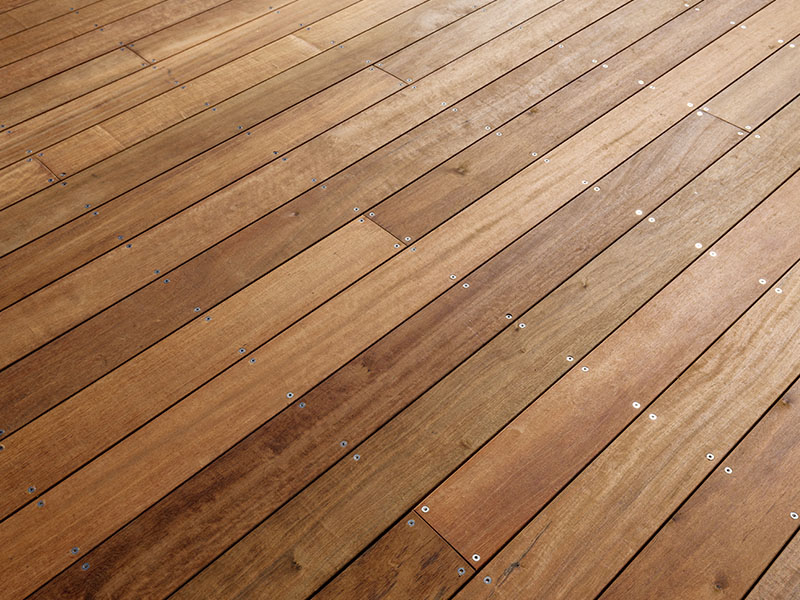
Although hardwoods possess high natural durability, regular surface maintenance preserves timber color and prevents surface checking.
+-----------------------------------------------------------------+
|                   SEASONAL MAINTENANCE ROUTINE                  |
+-----------------------------------------------------------------+
| INITIAL WEATHERING (WEEKS 1-8):                                 |
| [ ] Tannin Washing: Wash deck weekly to extract loose tannins   |
| [ ] Initial Sealing: Apply penetrating oil once boards dry      |
|                                                                 |
| ANNUAL CARE:                                                    |
| [ ] Spring Wash: Clean with mild oxygen-bleach timber wash      |
| [ ] Re-Oiling: Apply 1-2 coats of penetrating oil (Every 12-18m)|
+-----------------------------------------------------------------+
Ongoing Upkeep Protocol
-
Manage Initial Tannin Bleed: Allow raw Kwila to weather for 4 to 8 weeks, scrubbing occasionally with timber cleaner to extract loose tannins before applying a topcoat oil.
-
Apply Penetrating Timber Oils: Coat the deck with a high-quality oil-based or water-based penetrating oil every 12 to 18 months. Penetrating oils absorb into dense wood pores without forming a surface film that can peel or flake.
-
Clear Expansion Gaps: Sweep leaves, pine needles, and sand out of the 5mm expansion gaps between boards to preserve water runoff channels.
-
Avoid High-Pressure Washing: Do not hold high-pressure washers close to the wood face, as excessive pressure can gouge hardwood fibers.
Project Documentation and Record Keeping
Maintaining organized project records supports product warranty claims, simplifies oil re-coating schedules, and assists with home resale disclosures.
Recommended Record Keeping Folder
Keep a physical or digital project file containing:
-
Lumber Invoices & Delivery Dockets: Invoices specifying lineal meter quantities, board profiles, species, and supplier details.
-
Environmental Sourcing Certifications: Copies of FSC or PEFC certificates proving sustainable timber harvesting.
-
Stain / Oil Product Details: Keep photos or cans showing the exact brand, color tint name, and batch code of the decking oil used for consistent future maintenance.
Sample Project Documentation Logs
LOG ENTRY 1: MATERIAL PURCHASE & SPECS
- Date: February 10, 2026
- Supplier: Auckland Hardwood Timber Merchant (Invoice #AKL-88412)
- Species Purchased: 140x19mm Kiln-Dried Vitex Decking (Solomon Islands origin)
- Quantity Purchased: 280 Lineal Meters ($16.88/LM)
- Fasteners: Grade 316 Stainless Steel 10g x 50mm Decking Screws

LOG ENTRY 2: INITIAL COATING & UPKEEP SCHEDULE
- Installation Complete: February 24, 2026
- Factory Pre-Coating: Factory oil coat applied prior to delivery
- Topcoat Applied: March 15, 2026 (Applied 1 coat of clear penetrating timber oil)
- Next Maintenance Due: March 2027
Closing Summary
Sourcing materials through hardwood decking suppliers Auckland networks requires evaluating timber species (Kwila, Vitex, Garapa, Australian hardwoods), natural durability classes, moisture content, and sustainable forestry certifications. By converting lineal meter pricing into accurate square-meter coverage, factoring in subframe framing and trade labor, using stainless steel fasteners, and maintaining a regular oiling routine, property owners can build a durable outdoor deck that enhances their living space for decades.
Frequently Asked Questions (FAQ)
What is the average cost of hardwood decking timber per meter in Auckland?
Material supply costs for hardwood decking in Auckland generally range from $10.00 to $16.00 per lineal meter for 90x19mm narrow boards, and $16.00 to $25.00+ per lineal meter for 140x19mm wide boards depending on species and timber market rates.
Which hardwood decking species is best for Auckland’s climate?
Vitex and Garapa are highly popular in Auckland because they combine Class 2 durability (20–25 years service life) with lighter honey tones and low tannin leaching risks. Kwila remains a classic dark red-brown choice but requires tannin management. Australian Class 1 hardwoods (Spotted Gum/Ironbark) offer the highest durability (30–40+ years) for high-exposure or coastal sites.
How do I calculate how many lineal meters of hardwood decking I need?
For standard 90mm wide boards (installed with a 5mm gap), multiply your total deck square meterage ($m^2$) by 10.5 lineal meters. For 140mm wide boards (with a 5mm gap), multiply by 6.9 lineal meters. Always add a 10% waste allowance for end-cuts.
Do hardwood decking boards need to be pre-drilled before screwing?
Yes. Hardwoods are dense timbers that will snap screw shafts or split board ends if fasteners are driven directly. Always pre-drill a clearance pilot hole and countersink rose into every fastener point before driving stainless steel screws.